FILE 01 / 10 · § SELF ARCHIVE NO. 001

Yingte Xu许英特
PhD candidate · MPI-SP / Ruhr University Bochum
§ Self
Yingte's research applies formal methods to study the programming theory for quantum computing, including semantics, verification techniques, and proof automation. The aim is a practical toolchain that can naturally encode and verify quantum algorithms and protocols. Recent work also explores machine learning and LLM-based coding agents as a means toward this automation.
He is also drawn to AI research, especially in linear attention and multimodal models. He believes persona AI agents on edge devices will become prominent, demanding new architectures, training methods, and evaluation metrics.
He is fascinated by the design and building of systems, from formal reasoning and intelligent agents to creative expression.
§ Education & Employment
Research Assistant
PhD Student
The COVID pandemic and visa issues kept Yingte in Beijing for two years.
Remote Internship
Internship
Bachelor of Science (Physics)
§ Publications
§ Workshop Papers
PLanQC 2026, co-located with POPL 2026
§ Awards
Winner of CHES 2025 Deep Learning SCA Battle 2025
CHES 2025, GE Wars Organization Committee
Winner of the First National "Challenger Cup" Quantum Computing Competition 2022
Quantum Computing Cloud Platform, Chinese Academy of Sciences
National Scholarship 2019
Ministry of Education of the People's Republic of China
§ Research Projects
Fanal 2025-2026
A Lean 4 project for the foundational formalization and verification of quantum programs.
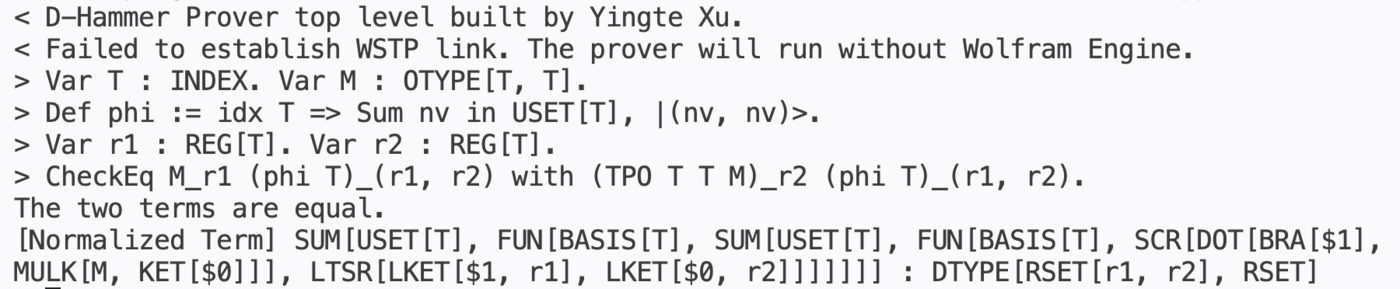
D-Hammer 2025
A C++ tool that efficiently decides equations of labelled Dirac notations.
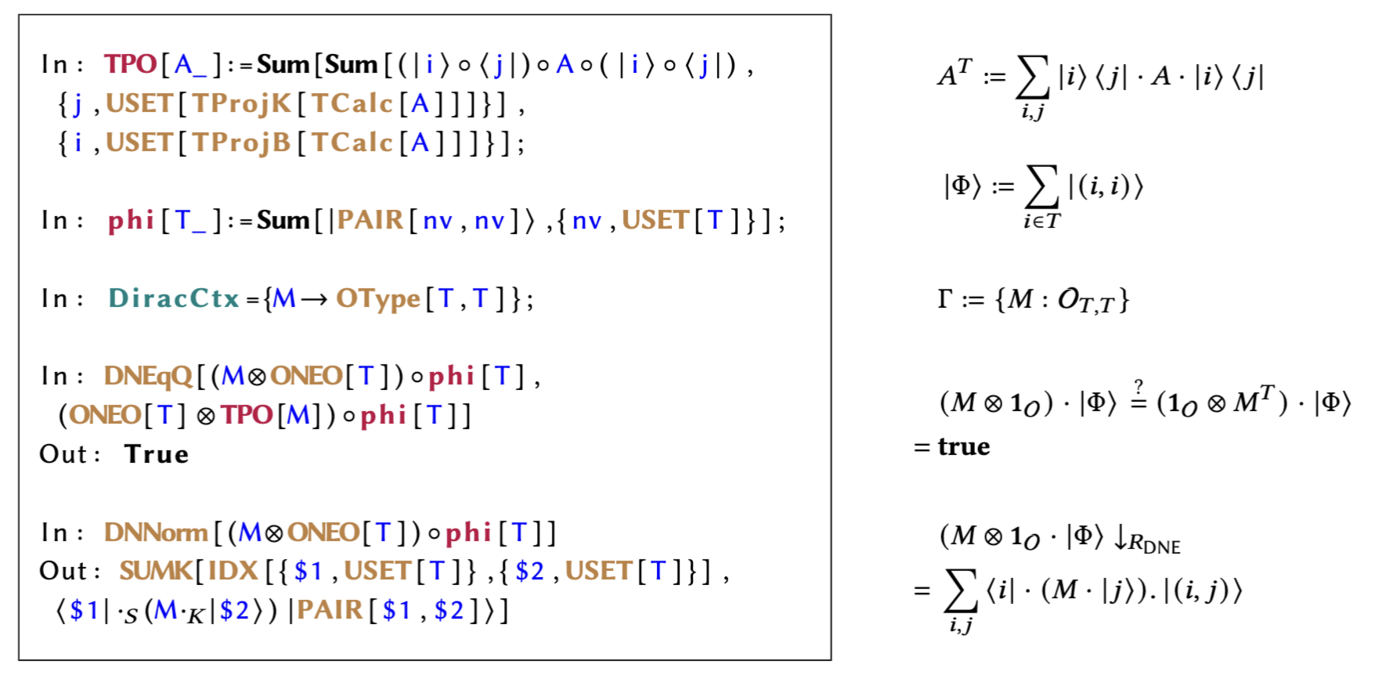
DiracDec 2024-2025
A prototype for proof automation of Dirac notation equations. Implemented in Mathematica, integrated with its computer algebra system for reals.
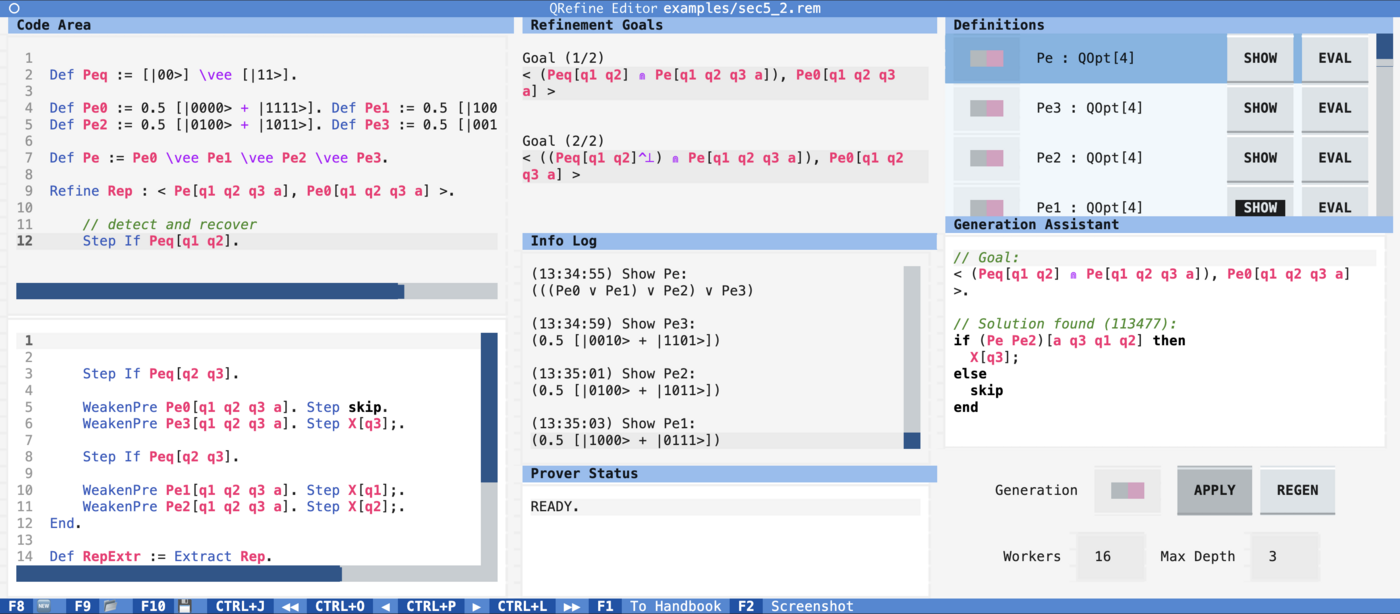
QRefine 2024
A prototype IDE for quantum program development with program refinement support, implemented in Python.
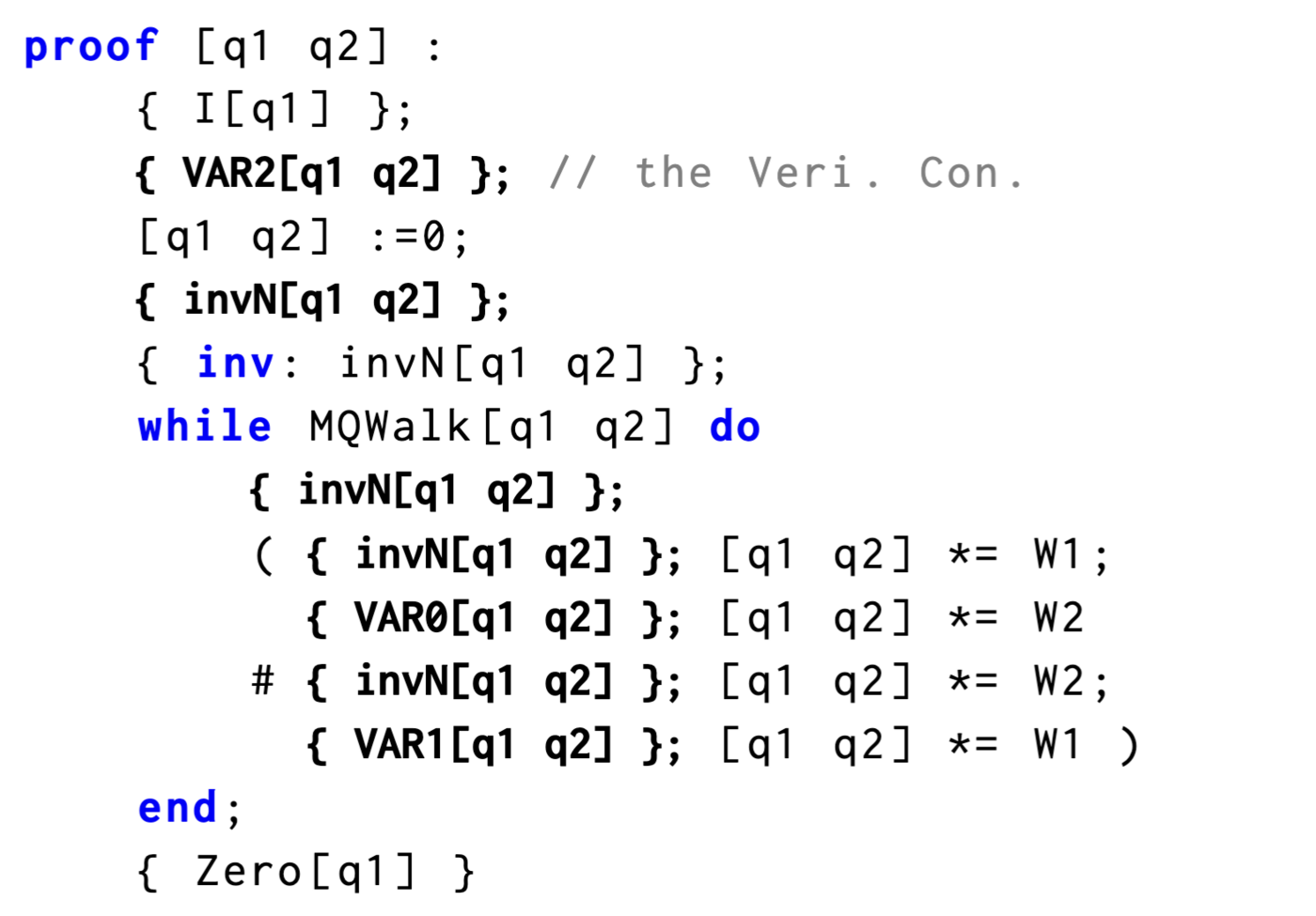
NQPV 2023
Artifact for verification of nondeterministic quantum programs.
§ Personal Experiments
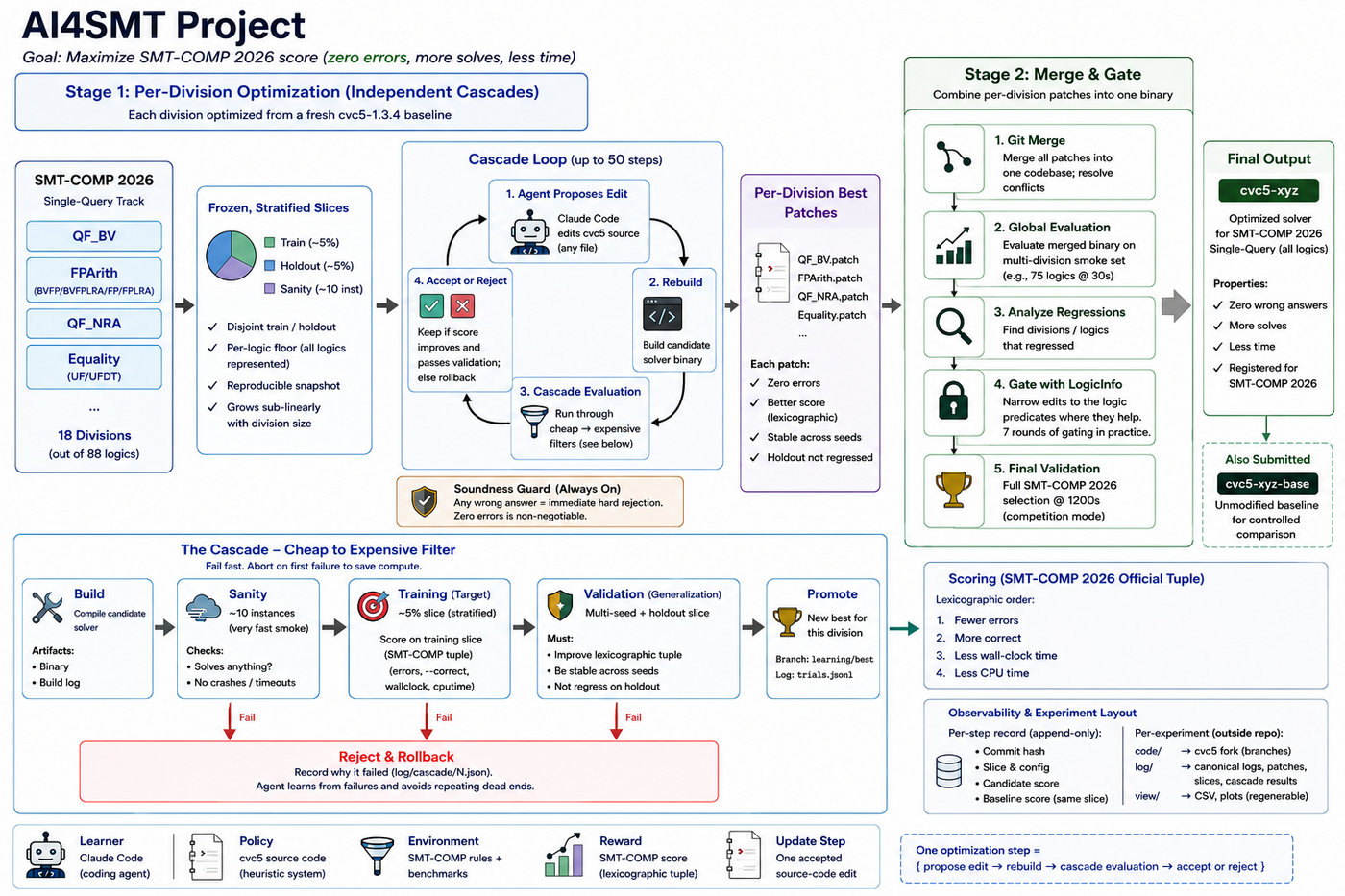
AI4SMT 2026
Optimizing SMT-solver heuristics with a coding agent. An AI agent repeatedly edits and rebuilds the cvc5 solver, keeping every change that improves its SMT-COMP score without trading away soundness. The trained solver is registered for SMT-COMP 2026.
EquationNN 2025
An attempt to solve hard equational reasoning problems using LLM + Reinforcement Learning.

§ Teaching
Quantum Computing Talent Development Summer School (USTC, online)
Linear Algebra (Lanzhou University)
§ Academic Service
§ Technical Skills
- Programming Languages
- Python, C/C++, OCaml, JavaScript, Mathematica, MATLAB
- Formal Methods & Proof Automation
- Rocq (Coq), Lean 4, term-rewriting engines, SMT and first-order (Vampire) solvers
- Machine Learning
- PyTorch, Hugging Face (Transformers, Datasets, Accelerate), NumPy, Pandas, Numba
- Systems & Tooling
- Docker, OpenTelemetry, reactive pipelines (ReactiveX / RxPY), WebSockets, LLM coding-agent workflows